7 Tips Are Aluminum Products Environmentally Friendly?

Time:2026-09-23 Author:Aria
0%

When people ask, “are aluminum products environmentally friendly,” the honest answer depends on the entire product lifecycle. Aluminum can be recycled repeatedly without losing its essential properties. Recycling also requires far less energy than producing primary aluminum from ore. However, mining bauxite and refining alumina can disturb land, consume energy, and create industrial waste.

This guide shares seven practical tips for evaluating aluminum products more carefully. Look beyond a shiny surface or a recyclable logo. Check the recycled content, manufacturing location, energy sources, coating materials, expected lifespan, and available recycling systems. A durable aluminum window, cookware item, or packaging container may reduce replacement waste over many years. Yet transport, complex finishes, and poor disposal choices can weaken those environmental benefits.

Real-world experience often reveals uncomfortable details. Some products contain recycled aluminum, but the percentage remains unclear. Others are technically recyclable, but local facilities cannot process them. Certification can support credibility, although labels should still be verified through reliable sources. Product declarations, manufacturer reports, and recognized lifecycle assessments provide stronger evidence than broad marketing claims.

There is no perfect answer.

The most responsible judgment compares alternatives fairly. It considers production impacts, practical use, maintenance, reuse, and end-of-life recovery. These seven tips will help readers ask better questions and avoid exaggerated sustainability claims. Aluminum can be a smart material choice, but only when its full environmental story is examined.
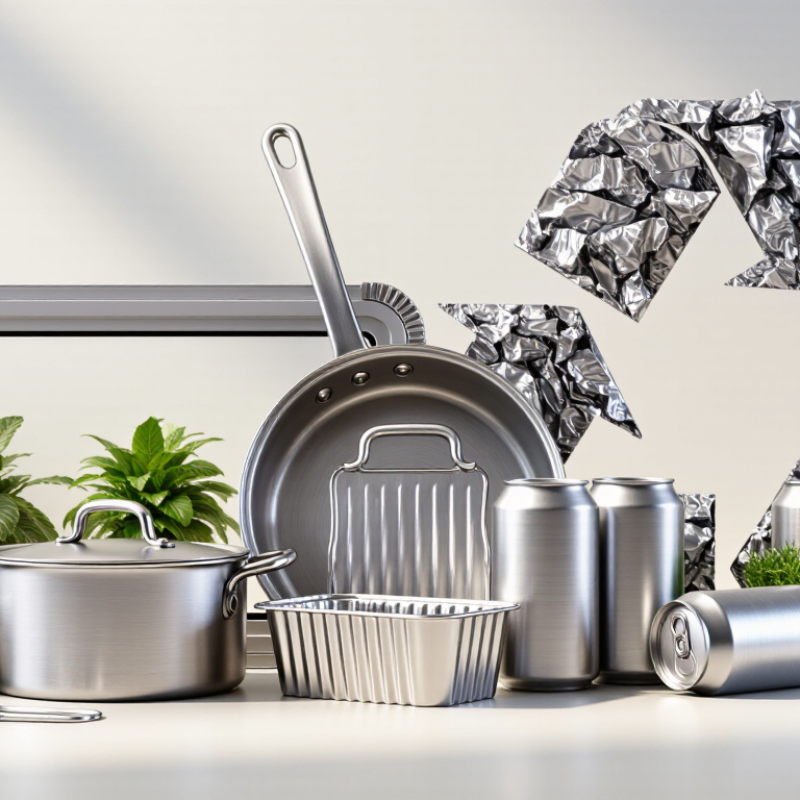
7 Tips Are Aluminum Products Environmentally Friendly?

What Makes Aluminum Products Environmentally Friendly?

Aluminum products can be environmentally friendly, but the answer depends on their full life cycle. The International Aluminium Institute reports that recycling aluminum uses about 5% of the energy required for primary production. That difference matters when an old window frame becomes a new sheet instead of landfill waste. Aluminum also resists corrosion and often lasts for decades. Long service reduces replacement demand.

However, mining, alumina refining, and smelting remain energy-intensive stages. IAI pathway studies identify cleaner electricity as a major emissions-reduction opportunity. Renewable power helps, but it does not erase every impact. Transport and finishing still count. That is the uncomfortable part.

What makes a product genuinely responsible? Look for recycled content, clear material labeling, repairable design, and accessible collection systems.

The U.S. Environmental Protection Agency’s WARM model estimates that recycling one short ton of aluminum can save roughly 14,000 kilowatt-hours compared with producing it from raw materials.

Still, recycled content alone can mislead. A lightweight item may need less transport energy, yet poor design can shorten its useful life. I would ask for verified recycled percentages, lifespan evidence, and clear end-of-life instructions.

Those details are less glamorous. They are more useful. Environmental claims should be checked against lifecycle data, not packaging language.

How Aluminum Is Produced and Its Environmental Impact

7 Tips: Are Aluminum Products Environmentally Friendly?

How Aluminum Is Produced and Its Environmental Impact

Aluminum begins with bauxite, a reddish ore removed from open-pit mines. Mining can disturb forests, soil, water, and nearby communities. The Bayer process then separates alumina from the ore using heat and chemicals. In the Hall-Héroult process, alumina becomes aluminum through intense electrolysis. This stage consumes substantial electricity and may release greenhouse gases, including perfluorocarbons during process disturbances. Cleaner electricity can reduce, but not erase, the impact.

Tip 1: Ask about recycled content.
Tip 2: Check the energy source.
Tip 3: Prefer clear environmental data.

Recycled aluminum usually requires far less energy than primary aluminum. It can also retain material value through repeated recycling, although sorting, coatings, alloys, and contamination complicate recovery. A durable product may outperform a cheaper option that needs frequent replacement. However, “recyclable” does not guarantee recycling in every local system. That distinction is easy to miss.

Tip 4: Choose durable designs.
Tip 5: Avoid unnecessary mixed materials.
Tip 6: Maintain surfaces carefully.

Manufacturers should disclose mining practices, electricity use, emissions, recycled content, and end-of-life pathways. Independent lifecycle assessments provide stronger evidence than vague environmental claims. Product transport, finishing, packaging, and repairability also deserve attention. Aluminum is not automatically green. My cautious view is that its environmental profile depends on origin, production method, service life, and actual recovery. Even well-designed assessments contain assumptions, so compare the evidence before deciding.

Tip 7: Request verifiable lifecycle information.

7 Tips Are Aluminum Products Environmentally Friendly? - How Aluminum Is Produced and Its Environmental Impact
Topic or Tip Verified Data or Typical Range Environmental Meaning Practical Recommendation
How Aluminum Is Produced
Bauxite mining and alumina refining Aluminum production begins with bauxite mining. The ore is refined into alumina before being converted into aluminum metal. Mining can alter land, generate dust, and affect soil and water if rehabilitation and waste controls are inadequate. Prefer suppliers that disclose mine rehabilitation, biodiversity protection, residue management, and water-monitoring practices.
Electricity used in primary production Approximately 14–16 kWh per kg of primary aluminum Electricity is one of the largest contributors to the environmental footprint of primary aluminum. The impact depends strongly on the electricity source. Reduce demand where possible and favor recycled aluminum or production powered by lower-carbon electricity.
Greenhouse-gas emissions Approximately 11–16 tonnes of CO₂-equivalent per tonne of primary aluminum, depending on technology, electricity, and accounting boundaries Primary aluminum generally has a much higher climate impact than recycled aluminum. Ask for product-level carbon data and check whether the stated figure covers mining, refining, smelting, and electricity use.
Bauxite residue Roughly 1–1.5 tonnes of bauxite residue may be generated per tonne of alumina, although the amount varies by ore and process Residue storage requires engineered containment and long-term monitoring because it can be highly alkaline. Support closed-loop residue treatment, safe storage, rehabilitation, and beneficial reuse where technically and legally appropriate.
Recycled aluminum energy use Recycling typically uses about 5% of the energy required for primary production, or up to 95% less energy Recycling can substantially reduce energy demand and associated emissions while avoiding additional mining and refining. Choose products with verified recycled content and maintain collection systems that return aluminum to recycling facilities.
Seven Ways to Improve Aluminum’s Environmental Performance
1. Choose recycled content Recycled aluminum can deliver energy savings of up to about 95% compared with primary aluminum. Higher recycled content usually lowers the production-stage energy and carbon footprint. Compare the percentage of post-consumer and post-industrial recycled content rather than relying only on general sustainability claims.
2. Use aluminum for long-life products Aluminum is lightweight, corrosion-resistant, and can remain in service for decades when properly designed and maintained. A long service life spreads the initial production impact over many years of use. Favor durable, repairable, and replaceable-component designs over short-lived products.
3. Reduce unnecessary material Lower product weight generally reduces the amount of material, processing energy, and transport required. Lightweight design can reduce impacts without eliminating aluminum’s functional benefits. Use optimized thickness, structural design, and material efficiency while keeping safety and durability requirements.
4. Keep aluminum separate from contamination Food residue, mixed materials, coatings, and attachments can reduce sorting efficiency and material yield. Cleaner scrap is easier to sort and remelt, helping preserve the value of the metal. Empty and rinse containers when required, remove non-aluminum parts where practical, and follow local recycling instructions.
5. Avoid unnecessary single-use products Recycling is beneficial, but collection and remelting still require energy and infrastructure. Reducing consumption usually has a greater environmental benefit than relying on recycling alone. Use reusable aluminum products when they are suitable, durable, and likely to be used repeatedly.
6. Design for recycling Aluminum itself is highly recyclable, but mixed-material assemblies, permanent adhesives, and complex coatings can complicate recovery. Design decisions affect sorting, separation, recycling yield, and the quality of recovered metal. Use easily separable components, compatible coatings, clear material identification, and minimal mixed-material construction.
7. Consider the complete life cycle Aluminum is not automatically environmentally friendly; mining, refining, smelting, transport, use, and end-of-life management all matter. The best option depends on service life, material quantity, recycled content, electricity source, transport, and recycling access. Evaluate the full life cycle instead of judging a product only by its material type or recyclability claim.
Data note: Figures are indicative global ranges compiled from publicly available life-cycle assessments, aluminum-industry environmental datasets, energy studies, and waste-management research. Actual results vary by ore quality, production technology, electricity mix, product design, transport distance, and local recycling performance.

Seven Ways to Use Aluminum More Sustainably

7 Tips: Are Aluminum Products Environmentally Friendly?

Aluminum can be sustainable, but its impact depends on how it is made, used, and recovered. The International Aluminium Institute reports that recycled aluminum requires about 5% of the energy used for primary aluminum. Choose products with verified recycled content and transparent environmental data. Design parts for disassembly, using accessible fasteners instead of permanent bonds. Keep them in service.

Extend product life through routine cleaning, corrosion checks, and timely repairs. Reuse sheets, frames, and containers before replacing them. Separate aluminum from food residue, plastics, and other metals at collection points. The United States Environmental Protection Agency states that recycling aluminum cans can save about 95% of the energy needed for virgin production. Small sorting mistakes still reduce recovery quality.

Limit coatings, laminations, and mixed-material assemblies when they add no clear function. Verify supplier claims through life-cycle assessments, recycled-content certificates, or third-party environmental product declarations. Measure the gap between claimed and actual performance. Transport also matters, especially for heavy, low-value components. A practical audit may reveal that a “green” product is replaced too soon, or shipped unnecessarily far. Sustainability is useful only when measured honestly.

How Recycling Improves Aluminum’s Environmental Profile

Aluminum’s environmental profile improves sharply when old products return to a recycling stream. Recycling aluminum can require around 5% of the energy used to make primary metal from ore. That difference means fewer mining operations, lower process emissions, and less waste near extraction sites. The benefit is practical, not magical. Collection, sorting, and transport still consume energy.

At home or work, keep cans, trays, and clean offcuts separate from food waste. Empty them, give sticky items a quick rinse, and let them dry. Do not place foil inside another container; sorting equipment may miss it. Reuse sturdy containers before recycling them. Ask local authorities about foil, coated parts, and mixed-metal products. A small sign beside a bin can prevent contamination. When buying a new item, look for recycled content and repairable designs.

Practical materials audits often show that human confusion is the weakest link. A wet food tray can spoil a batch, while a loose foil lid may enter the wrong stream. Recycling rates also vary widely by region, so responsible claims need local evidence. Recycled aluminum is valuable, but it is not automatically low-impact. Mining, coatings, transport, and repeated heating still matter. I would question any product claim that gives no recycled-content percentage or recovery pathway.

What to Consider Before Choosing Aluminum Products

7 Tips: Are Aluminum Products Environmentally Friendly?

Before choosing aluminum products, examine their full life cycle. Aluminum can be recycled repeatedly without losing its basic properties. However, producing primary aluminum requires significant electricity and mining. Ask whether the material contains verified recycled content. A clear percentage is more useful than vague environmental language. Check the energy source used during production, too. Lower-carbon electricity can reduce manufacturing emissions. Details matter.

Durability is another practical consideration. A sturdy aluminum window, panel, or container may serve for decades. Longer use can reduce replacement waste. Look at thickness, protective finishes, repair options, and expected exposure to moisture or salt. Coatings may improve performance, but they can complicate recycling. Mixed materials create another problem. Screws, plastic seals, and adhesives should be removable when possible. Reuse may be better than recycling.

Transport and end-of-life access also deserve attention. Lightweight aluminum can reduce shipping weight, but long-distance transport still adds emissions. Choose products made closer to the installation site when quality remains suitable. Confirm whether local facilities accept the specific aluminum item. Some recycling centers reject painted, laminated, or heavily contaminated pieces. Ask suppliers for lifecycle data, recycled-content evidence, and responsible sourcing documentation. Certifications can help, but they are not perfect. I have seen attractive claims hide important gaps. Compare evidence, not just packaging. A less polished product with repairable parts may perform better environmentally over time.

FAQS

Why can aluminum products be environmentally friendly?

Aluminum can last for decades and resist corrosion. Long service reduces replacement demand. That helps.A product is more responsible when it also uses recycled material and supports recovery after use.

How much energy does recycled aluminum require?

Recycled aluminum requires about 5% of the energy used for primary production.That is a major difference. However, collection, sorting, transport, and remelting still consume energy.

Does recycled content guarantee a sustainable product?

No. Recycled content alone provides an incomplete picture.A lightweight item may reduce transport emissions but fail quickly. Check its lifespan, repair options, and recovery instructions.

How can people extend an aluminum product’s useful life?

Clean surfaces regularly and check for corrosion. Repair loose parts before replacing the entire item.Reuse sturdy containers, sheets, and frames. Keep them in service.

How should aluminum items be prepared for recycling?

Empty cans, trays, and containers before collection. Remove food residue with a quick rinse, then let items dry.Keep aluminum separate from plastics and other metals. Small sorting mistakes can damage an entire batch.

Can foil and coated aluminum be recycled?

Recycling rules differ by location. Ask the local collection service about foil, coated parts, and mixed-metal products.Do not assume every facility accepts them. That assumption can be wrong.

What design features improve aluminum’s environmental performance?

Choose products with accessible fasteners and replaceable parts. Avoid unnecessary coatings, laminations, and permanent bonds.Simple disassembly helps repair and recycling. Fancy design is not always better.

How can buyers check environmental claims about aluminum products?

Look for verified recycled percentages, lifespan evidence, and clear end-of-life instructions.Independent lifecycle information can reveal hidden impacts from mining, finishing, and long-distance transport. Packaging language is not enough.

Conclusion

Are aluminum products environmentally friendly? The answer depends on how they are produced, used, and managed at the end of their life. Aluminum is lightweight, durable, corrosion-resistant, and highly recyclable, which can reduce resource use and waste over time. However, producing primary aluminum requires significant energy and can create environmental impacts through mining, refining, and smelting. Its sustainability therefore depends greatly on energy sources, production standards, and responsible material management.

Consumers can use aluminum more sustainably by choosing durable products, avoiding unnecessary disposables, maintaining items to extend their lifespan, selecting recycled or partly recycled materials, and separating aluminum correctly for recycling. Recycling is especially valuable because it generally requires much less energy than producing aluminum from raw ore and allows the material to remain in circulation. Before choosing aluminum products, consider their recycled content, expected service life, packaging, recyclability, manufacturing practices, and whether another material would better suit the purpose. A thoughtful life-cycle perspective provides a more accurate environmental assessment than focusing on one stage alone.

Aria

Aria

Aria is a dedicated marketing professional with a deep passion for innovative strategies and a keen understanding of our company's product offerings. With a wealth of experience in the industry, Aria excels at crafting engaging content that highlights the unique features and benefits of our......