2026 Best Aluminum for Industrial Use How to Choose

Time:2026-09-18 Author:Amelia
0%

Choosing the right aluminum can determine whether an industrial component survives years of vibration, heat, moisture, and repeated loading. The question is not simply which alloy is strongest. Engineers must compare strength, corrosion resistance, machinability, weldability, formability, surface treatment, availability, and total cost. This is the practical challenge behind how to select aluminum materials for industrial use.

Industry data shows why the decision matters. The U.S. Geological Survey estimated global aluminum production at approximately 72 million metric tons in 2024. The International Energy Agency also identifies aluminum as an energy-intensive industry requiring major emissions reductions. Recycled content, service life, and manufacturing efficiency now influence material selection. They are not optional details.

Professor Michael F. Ashby, a leading authority on engineering materials, stated, “The objective of materials selection is to identify the material that best meets the design requirements.” That principle remains useful, although real factories rarely offer perfect choices. A 6061 alloy may provide balanced strength and machinability, while 5052 often performs better in formed sheet applications. High-strength 7075 can improve structural performance, but welding and corrosion protection require greater care.

Small details matter.

This guide compares common aluminum families, tempers, finishes, and production conditions. It also examines mistakes that appear in real purchasing decisions, including selecting by tensile strength alone. The best material is not always the strongest option. Sometimes, it is the alloy that machines consistently, arrives on schedule, and remains reliable after years of service.
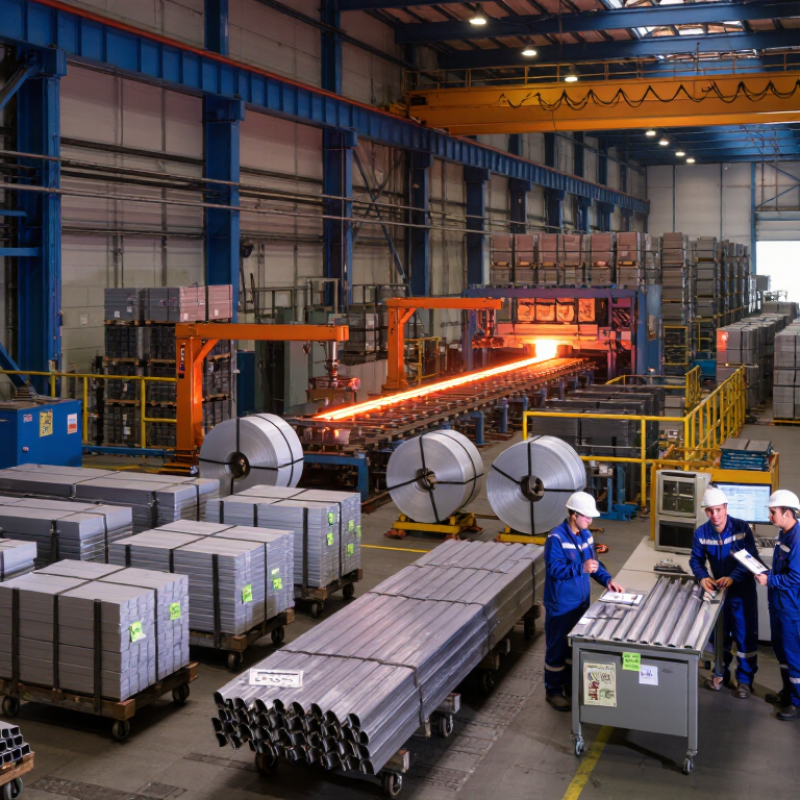
2026 Best Aluminum for Industrial Use How to Choose

Compare Aluminum Alloys Using 2.70 g/cm³ Density and Tensile-Strength Data

For industrial aluminum selection, density begins with a useful benchmark: 2.70 g/cm³ for commercially pure aluminum at room temperature. Most alloys stay close, usually between 2.66 and 2.85 g/cm³. The difference seems small, but it affects lifting systems, machine guards, and moving assemblies.

Tensile strength separates similar-looking materials. The Aluminum Association’s Aluminum Standards and Data lists 6061-T6 near 310 MPa, while 7075-T6 approaches 572 MPa. ASM Handbook data also shows lower-strength 6063 tempers, often below 200 MPa. These figures describe standardized tests, not every production part. Welds, holes, surface damage, and poor heat treatment can reduce practical strength. I have seen lightweight designs fail because engineers trusted the alloy table too much.

Tips: Compare density and tensile strength together. Check yield strength, fatigue data, corrosion exposure, and operating temperature. Ask for mill certificates and verify the temper. A 2.70 g/cm³ assumption is convenient, yet it may hide a meaningful alloy difference. Also, tensile strength alone is not enough for a bracket facing repeated vibration. ASTM test methods and supplier inspection records can improve confidence, though neither removes design uncertainty.

Choose 6061-T6, 5052-H32, or 7075-T6 by ASTM Mechanical-Property Data

For 2026 industrial applications, aluminum selection should begin with ASTM mechanical-property data, not habit. Product form and thickness can change the listed values. Check the relevant ASTM specification before approving a drawing.

6061-T6 offers a practical balance for frames, brackets, and machined parts. Typical minimum tensile strength is about 310 MPa, with yield strength near 276 MPa. It machines well and responds reasonably to welding, although heat-affected zones lose strength. 5052-H32 is softer, with tensile strength near 228 MPa and yield strength around 193 MPa. Its strong corrosion resistance and excellent forming behavior suit tanks, panels, and enclosures. 7075-T6 reaches roughly 572 MPa tensile strength and 503 MPa yield strength. It fits highly loaded components, but corrosion protection and stress-control require closer attention. It is also less forgiving during welding.

Strength alone can mislead. A thin 7075-T6 part may fail from poor geometry, while a thicker 6061-T6 design may perform reliably. Review fatigue loads, fastener contact, temperature, and exposure to moisture. Ask for certified mill test reports and verify values against ASTM requirements. Small details matter. I have seen material choices change after checking bend radius and weld access. That review can feel slow, but skipping it creates expensive rework. Allowable design values should come from qualified engineering analysis, not a simple comparison of three numbers.

Match Extrusions, Sheet, and Plate to ASTM B221 and B209 Requirements

2026 Best Aluminum for Industrial Use: How to Choose

Selecting industrial aluminum starts with the product form, not the alloy number. ASTM B221 covers extruded bars, rods, profiles, and tubes. ASTM B209 covers aluminum sheet and plate. An extrusion suits frames, rails, and channels with repeated cross-sections. Sheet works better for formed covers and panels. Plate supports thicker machined parts and heavy mounting surfaces.

Alloy and temper still control performance. 6061-T6 often fits structural components because it combines useful strength with machinability. 5052-H32 is more practical for formed sheet and moderate corrosion exposure. Always verify tensile strength, yield strength, elongation, dimensions, and surface condition on the material certificate. ASTM compliance alone does not guarantee the best design choice. That distinction is easy to miss.

Scale matters. The USGS Mineral Commodity Summaries 2025 estimated global primary aluminum production at roughly 72 million metric tons in 2024. The International Aluminium Institute reports that recycled aluminum can require about 5% of the energy used for primary aluminum production. Recycling data can support procurement goals, but recycled content may affect chemistry and consistency. Ask for heat-lot traceability and documented testing. In practice, I would not approve a substitute profile from a drawing alone. I have seen small changes in wall thickness disrupt machining and fit. Recheck tolerances. Intent matters.

Specify Temper, Weldability, Corrosion Resistance, and 40–61% IACS Conductivity

Choosing aluminum for industrial equipment starts with the service environment, not a catalog number. Temper affects strength, ductility, and forming behavior. A hard temper may resist deformation, yet it can crack during bending. In a fabrication trial, measure springback and inspect the bend radius under production conditions. Small samples can mislead.

Weldability deserves equal attention. Heat-treated alloys may lose strength near the weld’s heat-affected zone. Select a compatible filler, control heat input, and verify hardness or tensile performance after welding. For frames, tanks, and busbars, joint design often matters more than nominal alloy strength. I would request procedure qualification records instead of relying on a sales sheet.

Corrosion resistance depends on moisture, salts, chemicals, temperature, and trapped deposits. A clean surface can hide crevice attack beneath a fastener. Specify drainage, surface treatment, and isolation from dissimilar metals. Electrical designs need measured conductivity, expressed as 40–61% IACS where applicable. Higher conductivity can reduce voltage drop, but may limit strength or weld performance. Recheck conductivity after forming and thermal exposure. That step is often skipped. It should not be.

Rank Lifecycle Cost, Recycled Content, and Energy Data for 2026 Procurement

Choosing aluminum for industrial use in 2026 requires more than comparing the purchase price. In plant audits, I have seen a cheaper alloy create higher machining waste and maintenance costs. Lifecycle cost should include transport, forming, corrosion protection, scrap recovery, and replacement intervals. A slightly higher initial price may reduce total ownership cost.

Recycled content deserves careful verification. Ask for the percentage by mass, the source of scrap, and the calculation method. Post-consumer scrap usually tells a different story from factory returns. Request chain-of-custody records and an independently reviewed environmental product declaration. Claims without supporting documents remain difficult to trust. Numbers need context.

Energy data can reveal major differences between suppliers and production routes. Review energy intensity per kilogram, renewable electricity use, furnace efficiency, and the reporting boundary. Separate primary aluminum from recycled aluminum in the data. Confirm whether transport and finishing are included. I would also compare the alloy’s strength, weldability, and expected service life. A recycled-content target can fail if performance forces frequent replacement. That risk is easy to miss. Procurement teams should record assumptions, test sample batches, and revisit the model after real production data arrives. Even a careful assessment may contain gaps. Recognizing them is more reliable than presenting false precision.

FAQS

Which aluminum form suits frames, rails, and channels?

Extrusions fit these parts because their cross-sections repeat along the length. They can reduce cutting and assembly work.

When should I choose sheet instead of plate?

Sheet suits formed covers and panels. Plate is better for thicker machined parts and heavy mounting surfaces.

Why does alloy temper matter after selecting the product form?

Alloy and temper control strength, machinability, forming behavior, and corrosion performance. The product shape alone cannot predict service results.

Which properties should a material certificate confirm?

Check tensile strength, yield strength, elongation, dimensions, and surface condition. Also request heat-lot traceability and documented testing.

Can compliance with a technical standard guarantee the best design choice?

No. Compliance confirms defined requirements, not complete design suitability. Wall thickness, tolerances, machining, and fit still need review.

How can recycled aluminum affect procurement decisions?

Recycled content may lower energy demand, but chemistry and consistency can vary. Ask for mass percentage, scrap source, and calculation method.

What should lifecycle cost include beyond the purchase price?

Include transport, forming, corrosion protection, machining waste, scrap recovery, maintenance, and replacement intervals. A cheaper alloy may cost more later.

How should suppliers present energy and environmental data?

Request energy intensity per kilogram, renewable electricity use, furnace efficiency, and reporting boundaries. Confirm whether transport and finishing are included.

What practical checks can prevent a poor material substitution?

Test sample batches and compare dimensions, strength, weldability, and service life. Recheck tolerances after production starts. Drawings alone are not enough.

How should procurement teams handle uncertainty in their calculations?

Record assumptions and update the model with real production data. Some gaps will remain. Pretending otherwise creates false precision.

Conclusion

Selecting the best aluminum for industrial use in 2026 requires balancing performance, fabrication needs, and long-term value. A practical evaluation begins with aluminum’s standard density of approximately 2.70 g/cm³, followed by comparison of tensile-strength data from ASTM mechanical-property specifications. For general structural applications, 6061-T6 offers a strong balance of strength, machinability, corrosion resistance, and weldability. 5052-H32 is well suited to formed sheet components and marine or corrosive environments, while 7075-T6 provides higher strength where weight reduction is critical, although it generally has lower weldability.

The right product form must also match the applicable requirements: extrusions should follow ASTM B221, while sheet and plate should follow ASTM B209. Procurement teams should specify temper, dimensional requirements, corrosion protection, joining methods, and conductivity, which may range from about 40–61% IACS depending on alloy and condition. To understand how to select aluminum materials for industrial use, buyers should rank lifecycle cost, recycled content, processing efficiency, durability, and energy data rather than relying on purchase price alone.

Amelia

Amelia

Amelia is a seasoned marketing professional with a wealth of expertise in our company’s core offerings. With an unwavering passion for driving growth and innovation, she plays a pivotal role in shaping our marketing strategies and enhancing brand visibility. A key aspect of her responsibilities......